This article is prepared for technicians who wish to deploy localized nodes in Malaysia quickly and in compliance with regulations. It explains step by step what to do at each stage—from account and billing setup, selecting data centers and instances, network and security group configuration, public network exits and domain name resolution—to acceleration, monitoring, and common issues. It also clarifies where to perform these tasks, how to configure them, and why they are necessary, to help achieve stability on Alibaba Cloud Malaysia localization node Build .
When creating an instance in the Alibaba Cloud console, select Malaysia as the region (usually labeled as ap-southeast-5 or Malaysia/Kuala Lumpur). Choose an AZ within the same city based on data center resources and latency. If the target users are mainly in Malaysia, prioritize local availability zones to minimize network hops and latency. Instance specifications should be selected based on business load. The testing environment can start with 1C/2G, while for production environments, it is recommended to use network-enhanced or bandwidth-guaranteed specifications.
Create a Virtual Private Cloud (VPC) in the VPC module, create a dedicated VSwitch (subnet) for the Malaysia node, and specify the availability zone. Separate the internal and external networks by combining a routing table with a NAT gateway (if private network outbound access is required). For security and management, it is recommended to use different subnets for various services (Web, API, DB), and to configure internal network security policies and traffic mirroring (if monitoring is required).
Select the operating system image based on the application stack: For lightweight web applications, CentOS/Ubuntu LTS or AlmaLinux are recommended choices ; If containerization is used, you can directly select an image with Docker/Containerd. It is recommended to use high-performance cloud disks (SSDs) as the system disk, and select performance-oriented cloud disks for data disks based on IOPS requirements. When creating an image, be sure to choose one that matches the target architecture (x86/ARM) to avoid compatibility issues.
Security groups are the first line of defense for inbound/outbound access. Minimize open ports: SSH (22) only allows trusted IPs; HTTP (80)/HTTPS (443) are opened as needed, while database ports allow access only from the internal network or a jump server. It is recommended to enable Alibaba Cloud’s basic DDoS protection, along with host-level firewalls (ufw/iptables) for additional rate limiting and blacklist management, in order to reduce the risk of being scanned or attacked.
Assign an Elastic IP (EIP) to ECS, and point the domain name through Alibaba Cloud DNS to that EIP. For grayscale or high availability, use a load balancer (SLB) as the domain name origin-pull, with the EIP bound to the SLB. To improve local access speed, it is recommended to enable Alibaba Cloud’s Anycast or use Global DNS Routing (GTM) for proximity-based resolution.
Load Balancing (SLB) is used to distribute local traffic and enable failover, automatically removing abnormal instances through health checks. CDNs are used to accelerate static resources and reduce the load on the origin server. Malaysian localization nodes can be used as a CDN origin server or deployed downstream of the CDN. Static resources are stored in OSS and distributed via the CDN, while dynamic requests are processed by local ECS to ensure fast response times.
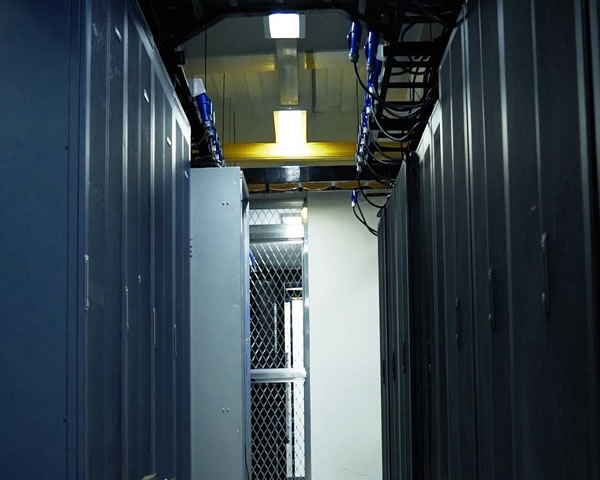
The billing items mainly include ECS instances, cloud disks, EIPs, traffic, SLBs, and CDN. Pay-as-you-go is suitable for testing and flexible scaling, while monthly subscriptions are ideal for stable, long-term loads. Traffic is a cost center that cannot be ignored. It is recommended to enable traffic monitoring and alerts, use caching and compression to reduce outbound traffic, and choose pay-as-you-go or peak bandwidth packages to lower costs.
After deployment, test network latency and paths using ping/traceroute. Conduct load testing with ab/jmeter or wrk to check response times, concurrent handling capacity, and error rates. Configure alert thresholds for CPU, memory, network traffic, and disk I/O through Alibaba Cloud Monitor (CloudMonitor), and combine this with Log Service (SLS) to collect application logs for issue troubleshooting.
Malaysia has specific data protection and content regulation requirements; it is necessary to confirm that the business and data storage comply with local laws before going live. If necessary, submit a record-filing request in the Alibaba Cloud console or consult the compliance team. When integrating with local payment, SMS, phone, and other services, it is also necessary to use Malaysian local service providers or Alibaba Cloud partners to ensure reliability.
Establish automated operation and maintenance processes: Use Alibaba Cloud’s Resource Orchestration Service (ROS), images, and Ansible/Chef/CloudInit for configuration management ; Enable automatic snapshot and backup policies ; Regularly practice failover and recovery. Utilize Alibaba Cloud Ops Assistant, monitoring alerts, and log analysis to quickly locate issues. For sudden high traffic, set up auto-scaling and load balancing strategies in advance.
- Latest articles
- Enterprises Expanding Markets To Sell Servers To Vietnam With Localized Pricing And After-sales System Setup
- How To Test CN2 Japan Link Quality And Generate Visual Reports
- Illustrated Guide To Setting Up IPs For Singapore Servers, Completing Network Segment Routing And Firewall Configuration
- Key Points For Disaster Recovery Switching And Load Balancing Design For VPS Nodes At The Vietnamese Node In Enterprise-level Architectures
- How To Determine How Much To Rent A VPS In Korea Based On Business Scale And Match Performance Requirements
- Vietnamese CN2 Service Provider: Price And Service Comparison To Help You Choose Quickly
- How Do Enterprises Assess The Time It Takes For Tencent Cloud Singapore Servers To Recover After A Failure?
- Guidance On The Application Of Korean IP Native In SEO And Refined Promotion Operations
- Cross-server StarCraft Battle, Creating A Room, Choosing A Korean Server, Multi-country Player Experience Analysis
- Consider Multi-region Backups: Which Cloud Server In Taiwan Is Recommended With Excellent Disaster Recovery Capabilities?
- Popular tags
-

Why Malaysia Cn2 Has Become The Preferred Server For Enterprises
discuss why malaysia cn2 has become the preferred server for enterprises and analyze its advantages and characteristics. -

Analysis Of Malaysia’s Cn2 Gia’s Interconnection Ecology And Line Advantages From An Operator’s Perspective
from the operator's perspective, we analyze malaysia's cn2 gia's interconnection ecosystem, network topology, qos guarantee, bandwidth and cost control, as well as its actual impact on business access and disaster recovery, and reveal line advantages and deployment suggestions. -

How Enterprises Evaluate Malaysia Cn2 Service Quality Based On Sla
this article introduces how enterprises evaluate the service quality of malaysia's cn2 based on sla, including availability, delay, packet loss, mttr, routing strategy, cdn and high-defense capabilities, and recommends dexun telecommunications as the preferred supplier.